
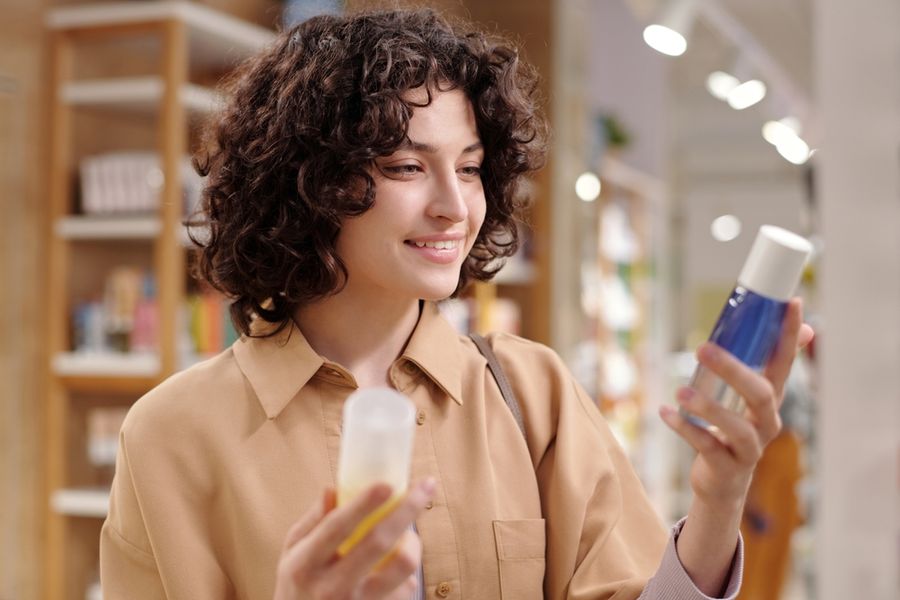
Curly hair is beautiful, versatile, and full of personality—but it also has specific needs. Because curls bend and twist, natural oils from the scalp have a harder time traveling down the hair shaft, making curls more prone to dryness, frizz, and breakage. Choosing the right products is less about brand names and more about understanding ingredients. Knowing what helps curls thrive—and what quietly works against them—can make all the difference in moisture, definition, and long-term hair health.
Ingredients Curly Hair Gals Should Look For
1. Water (Aqua)
It may sound obvious, but water is the most important ingredient for curly hair. Curls need hydration first and foremost. If water is not listed near the top of the ingredient list, the product is unlikely to provide meaningful moisture, no matter how luxurious it feels.
2. Humectants
Humectants attract and bind moisture to the hair. Ingredients like glycerin, honey, aloe vera, panthenol (pro-vitamin B5), and propanediol help curls stay hydrated and bouncy. These are especially beneficial for dry or high-porosity hair, though they may need to be balanced with sealing ingredients in very humid or very dry climates.
3. Emollients and Natural Oils
Emollients soften the hair and help smooth the cuticle. Look for ingredients such as shea butter, mango butter, cocoa butter, argan oil, jojoba oil, avocado oil, and olive oil. These ingredients help seal in moisture, enhance shine, and reduce frizz without stripping the hair.
4. Film-Forming Ingredients for Definition
To maintain curl shape and fight frizz, curls benefit from light hold. Ingredients like flaxseed extract, xanthan gum, pectin, and hydrolyzed plant proteins form flexible films around the hair, helping curls clump and hold their pattern without stiffness.
5. Hydrolyzed Proteins (In Moderation)
Protein helps strengthen curls, especially if hair is color-treated, heat-damaged, or prone to breakage. Ingredients like hydrolyzed wheat protein, silk protein, rice protein, and keratin can improve elasticity and structure. The key is moderation—too much protein can make curls feel stiff or brittle.
6. Fatty Alcohols
Not all alcohols are bad. Fatty alcohols such as cetyl alcohol, cetearyl alcohol, and behenyl alcohol are derived from plants and actually help moisturize and soften curls. They improve slip and make detangling easier, which is crucial for minimizing breakage.
Ingredients Curly Hair Gals Should Be Cautious About or Avoid
1. Harsh Sulfates
Sulfates like sodium lauryl sulfate (SLS) and sodium laureth sulfate (SLES) are strong detergents that strip away natural oils. While they can create a satisfying lather, they often leave curls dry, frizzy, and vulnerable to damage. Many curly gals opt for sulfate-free cleansers or use sulfates sparingly.
2. Drying Alcohols
Short-chain alcohols such as isopropyl alcohol, ethanol, SD alcohol, and denatured alcohol can evaporate quickly and pull moisture from the hair. When used frequently, they contribute to dryness and breakage, particularly in leave-in products.
3. Non–Water-Soluble Silicones
Silicones like dimethicone, amodimethicone, and cyclopentasiloxane create a smooth, shiny finish but can build up on curls over time. This buildup blocks moisture from entering the hair shaft and often requires harsh sulfates to remove. Water-soluble silicones or silicone-free formulas are generally more curl-friendly.
4. Heavy Waxes and Mineral Oil
Petrolatum, mineral oil, and paraffin coat the hair but do not hydrate it. They can weigh curls down, attract buildup, and make hair feel greasy while still being dry underneath. These ingredients may offer short-term shine but tend to sabotage long-term curl health.
5. Overpowering Fragrance and Essential Oils
Fragrance isn’t inherently bad, but high concentrations—especially of essential oils like peppermint, eucalyptus, or citrus—can irritate the scalp or dry out curls. If fragrance appears high on the ingredient list, it may be doing more harm than good.
How to Read Ingredient Lists Like a Pro
Ingredients are listed in order of concentration, from highest to lowest. Focus on the first five to ten ingredients—they tell the real story of what the product delivers. No single ingredient guarantees success; it’s the overall balance that matters. Pay attention to how your curls respond, and adjust based on moisture levels, climate, and styling habits.
Curly hair flourishes when it’s treated with intention. By choosing products with ingredients that hydrate, strengthen, and protect—and avoiding those that strip or suffocate—curly hair gals can build routines that support healthy, defined, and confident curls every day.